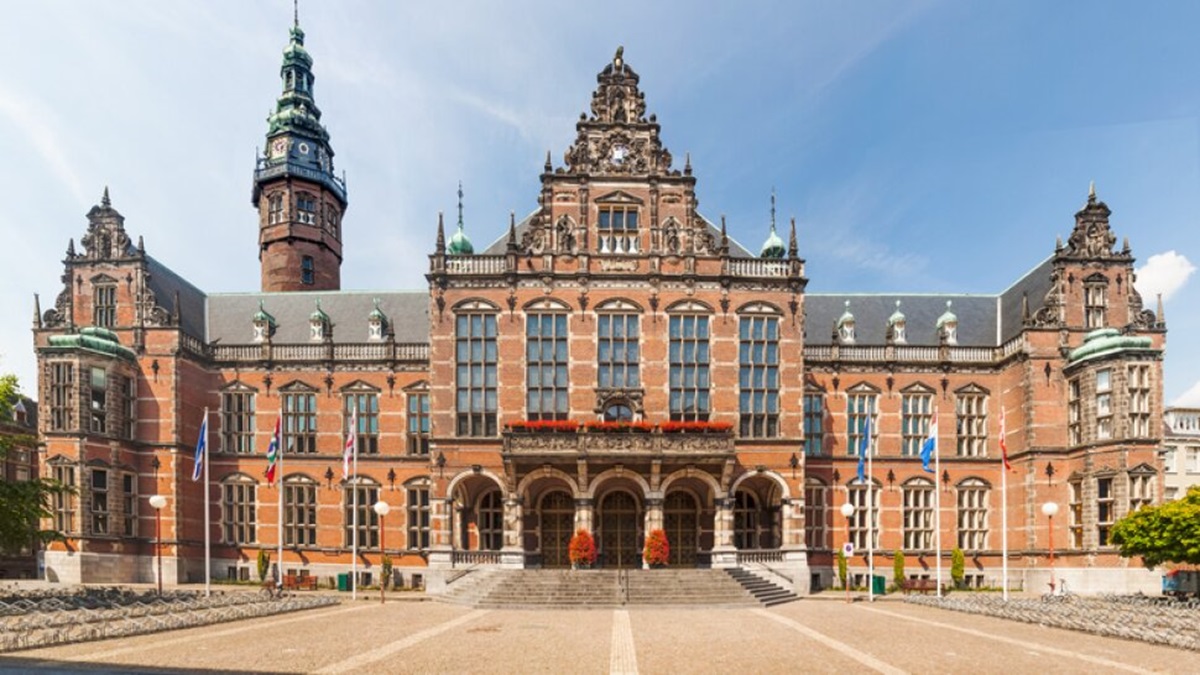
Postdoctoral Scholarships at The University of Groningen, a public research university in the city of Groningen in the Netherlands.
Postdoctoral Scholarships at Groningen University in Netherlands
Post-doc Researcher
The Social Psychology Group of the University of Groningen invites applications for a postdoctoral researcher position. This new position is part of the Vidi project of Namkje Koudenburg “The conversational dynamics of polarization: bottom-up drivers of societal division and democratic resilience”, funded by NWO. The successful candidate will work together with Prof. Koudenburg and Prof. Mike Huiskes.
Polarization is one of the most urgent challenges facing Western democracies today. The Vidi-project investigates how conversational dynamics contribute to radical polarization, and how they can be harnessed to promote healthier democratic discourse. This part of the project focuses on online conversations. Building on social-psychological theorizing, but integrating insights from political, cultural, and communication studies, this project aims to analyse how micro-level dynamics in everyday conversations shape perceptions of polarization and influence public discourse. The core aims are to explain the principles of bottom-up polarization and develop guidelines for de-escalating discussions on online platforms. Through partnerships with government bodies and media platforms, the applicant will co-develop interventions to improve democratic discourse—particularly in online environments.
The postdoc will work on two sub-projects. Sub-project 1 assesses polarized conversational dynamics in existing datasets of online text-based conversations in The Netherlands and the United States on immigration. We are interested in how perceptions of polarization impact conversational dynamics. Using discourse analysis (DA), we will analyze positioning, alignment and sequence of interactional turns, as well as the construction of group identity through the use of categorization devices. Unique to this project is the integrated approach in which micro-analytic practices identified with DA are related to self-reported moralization and polarization—attitudinal, structural, and affective.
Sub-project 2 examines interventions to de-escalate online discussions. In two studies, we experimentally manipulate conversational dynamics that disrupt flow and signal conflict in online interactions to improve constructive discourse. We collaborate with an existing online discussion platform.
>
Post-doc Researcher
As part of the Precision Psychiatry Roadmap, two postdoctoral researchers will jointly conduct a large-scale biomarker mapping exercise focused on anxiety disorders, depression, and psychosis. Under the direct supervision of Prof. Martien Kas, the postdocs will systematically identify, categorize, and analyze established and ongoing international biomarker studies, including biological, behavioral, social, and digital biomarkers.
>
Post-doc Researcher
The project SUNRISE (SU pporting the agroecological traN sition thR ough livI ng labS nE tworks) aims to foster the agroecological transition by establishing a network of agroecological living labs (AELLs) across 10 European countries, building upon already existing living labs or situations that have great potential of becoming active AELL within the time span of the project.
>
Post-doc Researcher
Are you passionate about interfacing state-of-the-art sequencing techniques with deep learning approaches to accelerate the directed evolution of tailor-made (bio)catalysts and drugs? Supported by the Machine-Learning Guided Directed Evolution (ML-GUIDE) consortium, we are offering a fully funded Postdoctoral Researcher position at the University of Groningen.
>
Post-doc Researcher
The University of Groningen (UG), in close collaboration with the Health Technology Research & Innovation Cluster (HTRIC), is launching the A3i – Artificial Intelligence Innovation Identifier project as part of a CIT Innovation Grant (internal funding). The project aims to design and develop an advanced Retrieval-Augmented Generation (RAG) system powered by open-source Large Language Models (LLMs).
This system will support innovation professionals, healthcare researchers, and clinicians in navigating the vast and growing body of scientific literature produced primarily at UG/UMCG and in the wider healthcare domain. By integrating intelligent retrieval, automated summarisation, cross-referencing of internal and external research, and transparent source tracking, the tool will accelerate innovation discovery, reduce manual workload, and enhance the societal impact of healthcare research.
The postdoctoral researcher will join a multidisciplinary team including NLP researchers (the postdoc position will be embedded in the CLCG Computational Linguistics group), healthcare innovation experts, and data scientists. They will contribute to system design, data curation, model adaptation, evaluation, and user-centred development.
>
Post-doc Researcher
This postdoc position will interact with the several PhD positions hired on this project in Germany and The Netherlands. Collaborative work with the broader project team is expected.
>
Post-doc Researcher
We are forming a new interdisciplinary research team for the ERC-funded Synergy Grant project CrowdING . How do crowds suddenly start to queue, form lanes, or huddle together—and what makes them switch from one behaviour to another? A team of social psychologists, physicists and computer scientists from the Netherlands and Germany aims to answer that question. The research is supported by large-scale laboratory experiments with numerous test subjects, modern analysis methods, and powerful simulations of crowd behaviour. The project is a collaboration of the University of Groningen’s Department of Social Psychology (see below) and Forschungszentrum Jülich’s Institute for Advanced Simulation-7 .
There is an opportunity to join this new team as a postdoctoral researcher .
As a postdoctoral researcher, you will play a central role in the further development of social psychological research of crowd movement and/or in the integration of physics and social psychology of crowds in new models of crowd behaviour. You will develop your own research focus, support conceptual work, and contribute to scientific coordination within the project.
Faculty of Behavioural and Social Sciences
12 januari 2026
€3.546 – €5.538
>
Post-doc Researcher
In the Feringa lab, sustainable molecular design and green chemical processes are two of the central research themes. We are particularly interested in developing next-generation bio-based materials that align with industrial and environmental goals. As part of this effort, the current project supported by NWO (within the BigChemistry consortium) is devoted to the creation of fully renewable peptide-based surfactants.
Post navigation