Faculty: Faculty of Social and Behavioural SciencesDepartment: Social SciencesHours per week: 36 to 40Application deadline: 26 April 2026
Help shape how Europe measures economic well-being at the local level. In this project, you will develop innovative small area estimation methods to produce high-quality composite SDG indicators, combining survey, census, and non-traditional data sources such as web and satellite data. Contribute to ground-breaking methodology with real societal impact across the EU.
Your job
The Department of Methodology and Statistics has two openings for PhD candidates.
These PhD positions are part of a large 5-year ERC Starting Grant (2026-2030) funded project (Principal Investigator Angelo Moretti) titled “Small Area Estimation Methods to Monitor the Progress towards the Sustainable Development Goals at the Subnational Level in the European Union (SAESDGs-EU)”.
- PhD position in small area estimation in presence of latent variables
- PhD position in small area estimation in the context of multisource data (probability and nonprobability data)
The first position will be assigned to work package 1 (part B): Computing composite indicators of multidimensional social indicators within the small area estimation framework, whereas the second position to work package 2: Non-traditional data sources as auxiliary variables and multisource statistics issues.
The PhD candidates will be supervised by Dr Angelo Moretti, Dr Camilla Salvatore and Prof. Peter Lugtig who are part of the world leading group of Data Quality within the Department of Methodology and Statistics. Members of the group conduct cutting-edge research on a broad range of topics, including survey design, measurement error, nonresponse, data integration, register-based statistics, mixed-mode data collection, and methodological innovations for official statistics and social science research. The group maintains strong collaborations with national statistical institutes, international organisations, and academic partners, ensuring that its research has both scientific impact and societal relevance.
The department offers a vibrant and collaborative research environment, with regular seminars, international visitors, and active participation in international research networks. Recently, the group organised and hosted ESRA25, the European Survey Research Association conference, which is the largest international conference in the field of survey methodology in the world. Hosting ESRA25 further highlights the group’s leading position and strong international reputation within the global survey research community.
PhD candidates will be embedded in this dynamic research environment and will have the opportunity to engage with leading scholars in the field, present their work at international conferences, and contribute to high-impact scientific publications.
You will
- Conduct high-quality methodological research in the field of small area estimation
- Write academic articles, blog posts and statistical software
- Disseminate the research in conferences and other relevant events.
Your qualities
Essential
- We are looking for someone with a background in one of the following disciplines: Statistics, Mathematical Statistics, Mathematics, and Social Statistics
- We also welcome applications from candidates with a background in the social sciences, provided they have advanced training in methodological statistics
- You should have advanced programming skills in R or in other statistical software such as Python, or MATLAB.
- You should have a solid knowledge of statistical inference, statistical modelling
- You are able to work in a team while maintaining autonomy
- Proficiency in English (speaking, writing, reading and listening)
- You have demonstrated academic writing skills.
Desirable
- Knowledge of survey sampling
- Knowledge of structural equation modelling: this is for the PhD position in “small area estimation in presence of latent variables”
- Knowledge of data integration techniques (statistical matching and/or record linkage): this is for the PhD position in “small area estimation in the context of multisource data”
- Proficiency of GitHub
- You have demonstrated research skills
Our offer
- a job for one year, with an extension to a total of four years upon successful assessment after the first year of employment;
- a working week of 36 – 40 hours and a gross monthly salary between €3.059 and €3,881 in the case of full-time employment (salary scale P under the Collective Labour Agreement for Dutch Universities (CAO NU);
- 8% holiday pay and 8.3% year-end bonus;
- a pension scheme, partially paid parental leave and flexible terms of employment based on the CAO NU.
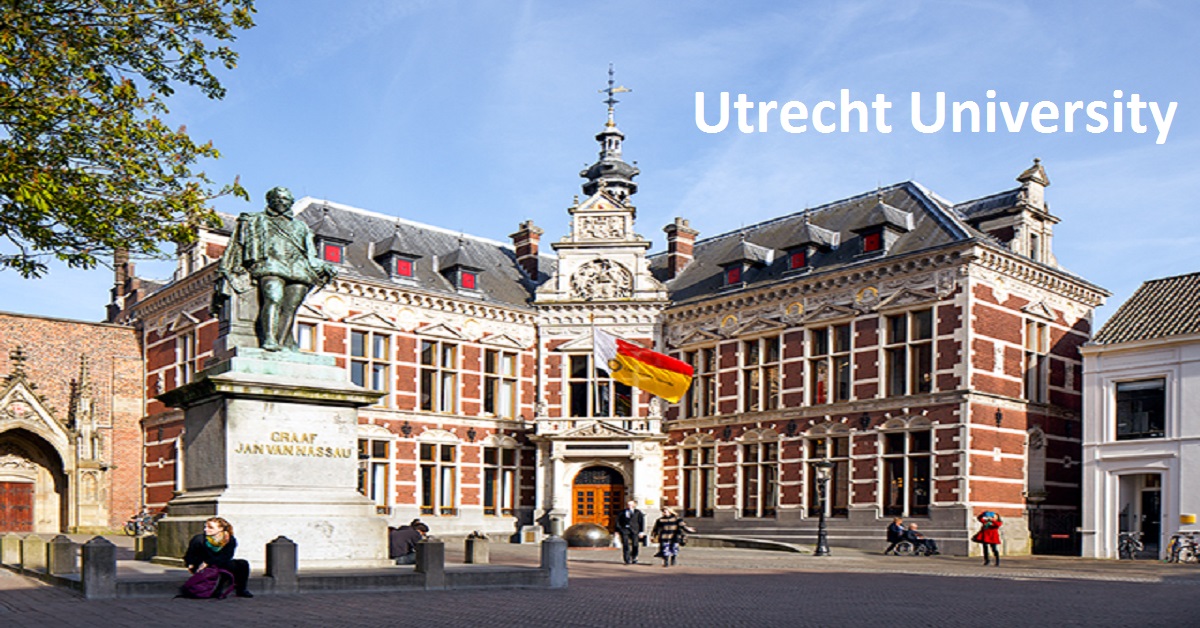
In addition to the terms of employment laid down in the CAO NU, Utrecht University also offers a range of its own schemes for employees. This includes arrangements for professional development, various types of leave, and options for sports and cultural activities. You can also tailor your employment conditions through our Terms of Employment Options Model. In this way, we encourage you to keep investing in your personal and professional development. For more information, please visit Working at Utrecht University.
About us
A better future for everyone. This ambition motivates our scientists in executing their leading research and inspiring teaching. At Utrecht University, the various disciplines collaborate intensively towards major strategic themes. Our focus is on Dynamics of Youth, Institutions for Open Societies, Life Sciences and Pathways to Sustainability. Sharing science, shaping tomorrow.
The Faculty of Social and Behavioural Sciences is one of the leading faculties in Europe providing research and academic teaching in cultural anthropology, educational sciences, interdisciplinary social science, pedagogical sciences, psychology, and sociology. Almost 7,000 students are enrolled in a broad range of undergraduate and graduate programmes. The Faculty of Social and Behavioural Sciences has some 1,100 faculty and staff members, all providing their individual contribution to the training and education of young talent and to the research into and finding solutions for scientific and societal issues.
The faculty is located at Utrecht Science Park near the historical city centre of Utrecht.
More information
For more information, please contact Dr. Angelo Moretti
at a.moretti@uu.nl.
Candidates for this vacancy will be recruited by Utrecht University.
Apply now
As Utrecht University, we want to be a home for everyone. We value staff with diverse backgrounds, perspectives and identities, including cultural, religious or ethnic background, gender, sexual orientation, disability or age. We strive to create a safe and inclusive environment in which everyone can flourish and contribute.
Knowledge security screening can be part of the selection procedures of academic staff. We do this, among other things, to prevent the unwanted transfer of sensitive knowledge and technology.
To apply, please send your curriculum vitae, including a letter of motivation, via the ‘apply now’ button. Please specify in your cover letter which position you are applying for. You may apply for both positions as well.
The first round of interviews will take place on 20th and 21st May. Please keep both days available. You will receive your allocated time slot should you be shortlisted. The interview may take place either online or in person, depending on the candidate’s preference.
The second round of interviews will take place on 9th and 10th June. You will receive your specific time slot if you are selected to proceed to the second round. The interview will take place online.
Further details will be provided to the shortlisted candidates.
Our preferred start date is 1st September 2026.
The application deadline is 26 April 2026.
About the Author