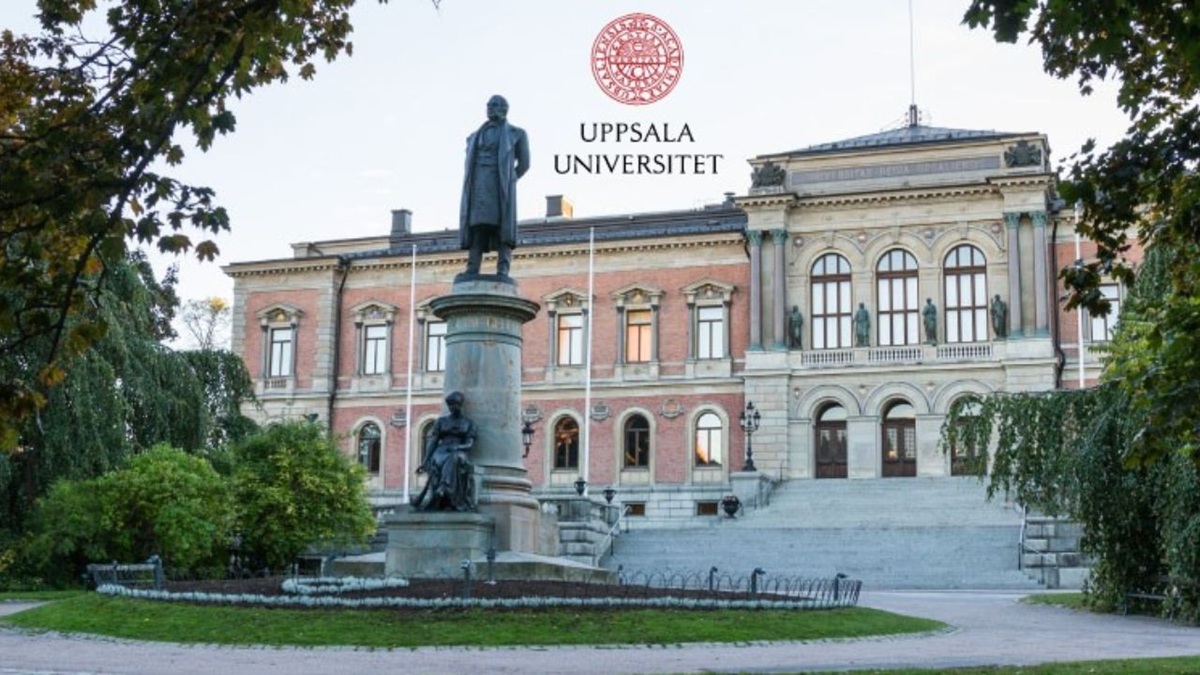
The Department of Chemistry – Ångström conducts research and education in the chemistry field. The department has more than 270 employees and has a turnover of 300 million SEK. At the department’s six programs, we conduct very successful research of a high international standard. We have a large number of externally funded research projects, often with international cooperation and we see continued good growth in our subject area. The department has education assignments in engineering programs and master’s programs. More information is available on our website.
Read more about our benefits and what it is like to work at Uppsala University
This recruitment is also connected to the Wallenberg Initiative Materials Science for Sustainability (WISE, https://wise-materials.org). WISE, funded by the Knut and Alice Wallenberg Foundation, is the largest-ever investment in materials science in Sweden and will encompass major efforts at Sweden’s foremost universities over the course of 10 years. The vision is a sustainable future through materials science. The recruited early-stage researcher will also be a part of the WISE Graduate School (https://wise-materials.org/research-school/), an ambitious nationwide program of seminars, courses, research visits, and other activities to promote a strong multi-disciplinary and international network between PhD students, postdocs, researchers and industry.
Work duties:
The project focuses on understanding how trace impurities present in recycled metal sulfate streams influence the synthesis and quality of precursor cathode active materials (pCAM) used in lithium-ion batteries. The research addresses challenges arising in circular battery value chains, where metals recovered through recycling processes may contain residual impurities that can affect precursor synthesis, particle morphology, and final material performance. The postdoctoral researcher will investigate ammonia-controlled co-precipitation of precursor materials and study how impurities such as Li⁺, Na⁺, F⁻, Mg²⁺, Cu²⁺ and Al³⁺ influence precipitation chemistry, metal partitioning, and precursor quality. The work will combine systematic experimental studies with advanced materials characterization to establish mechanistic understanding and define acceptable impurity ranges for precursor synthesis from recycled metal streams. The project will involve experimental design, synthesis and characterization of precursor materials, and analysis of impurity effects on precipitation behavior and particle properties. Selected precursor materials may also be evaluated through calcination and electrochemical testing to assess the potential impact of impurities on battery performance.
The main duties involved in a post-doctoral position is to conduct research. Teaching may also be included, but up to no more than 20% of working hours.
The duties may also include (e.g.):
- Research within the subject area of hydrometallurgy, battery recycling, precursor synthesis and battery materials
- Planning and conducting precipitation experiments in multi-component aqueous metal systems
- Characterization of precursor materials, including chemical, morphological, and electrochemical analyses, calcination, and performance testing in lithium-ion battery cells
- Data analysis and dissemination of research results through scientific publications and conference presentations
- Teaching in the first, second and third cycles of studies
- Possible supervision of degree projects
- Collaboration with industry and wider society
- Administration related to the work duties listed above
Requirements:
PhD degree in in Chemistry, Chemical Engineering, Materials Science, Metallurgical Engineering or equivalent/another relevant field or a foreign degree equivalent to a PhD degree in in Chemistry, Chemical Engineering, Materials Science, Metallurgical Engineering . The degree needs to be obtained by the time of the decision of employment. Those who have obtained a PhD degree three years prior to the application deadline are primarily considered for the employment. The starting point of the three-year frame period is the application deadline. Due to special circumstances, the degree may have been obtained earlier. The three-year period can be extended due to circumstances such as sick leave, parental leave, duties in labour unions, etc.
The assessment of applications is based primarily on the applicant’s ability to conduct independent research based on scientific skill. Greater importance is attached to the quality of individual scientific work, than to the amount of publications.
Consideration will also be given to good collaborative skills, drive and independence, and how the applicant’s experience and skills complement and strengthen ongoing research within the department, and how they stand to contribute to its future development.
The ability to work both independently and collaboratively is of great importance. The working group is small but highly productive with high demands on collaboration skills.
The candidate must have very good oral and written proficiency in English.
Desirable qualifications:
Advanced knowledge and/or practical experience in one or more of the following areas will be beneficial.
- Co-precipitation synthesis of transition metal hydroxides or cathode precursor materials
- Characterization of battery materials using techniques such as ICP-OES/ICP-MS, SEM, XRD, or particle size analysis
- Particle characterization techniques such as particle size distribution analysis or tap density measurements
- Hydrometallurgical processing or recycling of battery materials
- Fabrication and electrochemical testing of lithium-ion battery cells
- Chemical system simulation or thermodynamic/speciation modeling (e.g., HSC Chemistry, FactSage, or similar)
- Experience with data analysis software (e.g., Python, MATLAB, Origin)
- Ability to work collaboratively in multidisciplinary research teams
About the employment
The employment is a temporary position of 2 years according to central collective agreement. (Specify at least two years and at most three years) Scope of employment 100 %. Starting date as agreed. Placement: Uppsala
About the application
The application must include a CV, copies of degree certificates and grades. Applications will be assessed according to the following criteria: fulfilment of eligibility requirements, experience in related fields and personal suitability.
For further information about the position, please contact:
Nathalia Vieceli nathalia.vieceli@kemi.uu.se +46761866115 or
Martin Sahlberg, martin.sahlberg@kemi.uu.se +46704958939
Please submit your application by 22nd of May 2026, UFV-PA 2026/914.
Uppsala University is a broad research university with a strong international position. The ultimate goal is to conduct education and research of the highest quality and relevance to make a difference in society. Our most important asset is all of our 7,600 employees and 53,000 students who, with curiosity and commitment, make Uppsala University one of Sweden’s most exciting workplaces.
Read more about our benefits and what it is like to work at Uppsala University
https://uu.se/om-uu/jobba-hos-oss/
The position may be subject to security vetting. If security vetting is conducted, the applicant must pass the vetting process to be eligible for employment.
Please do not send offers of recruitment or advertising services.
Submit your application through Uppsala University’s recruitment system.Placement:Disciplinary Domain of Science and Technology, Faculty of Chemistry, Department of Chemistry – Ångström LaboratoryScope:Full timeWorking hours:100%Type of employment:Temporary positionPay:Individuell lönNumber of positions:1Town:UppsalaUnion representative:
Number of reference:UFV-PA 2026/914Last application date:22 May 2026