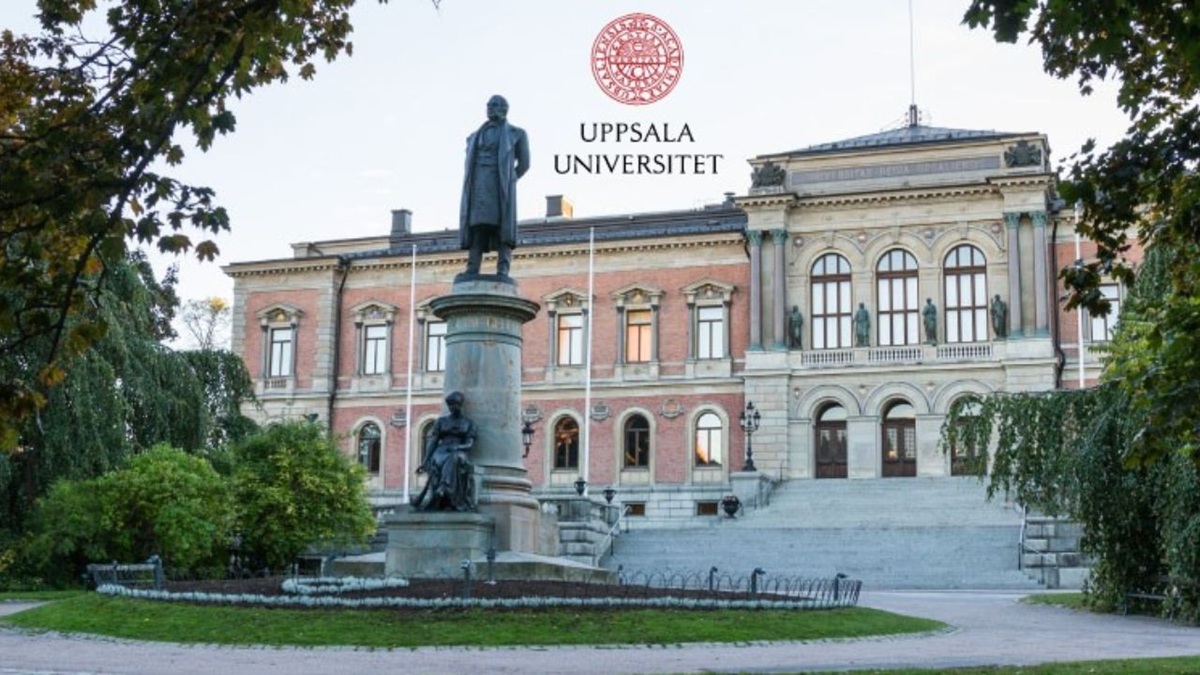
The Department of Immunology, Genetics and Pathology at Uppsala University has a broad research profile with strong research groups focusing on cancer, genetic and autoimmune diseases. A fundamental idea at the department is to stimulate translational research and thereby promote closer interactions between medical research and health care. Research is presently organized in six research programs: Cancer Precision Medicine, Cancer Immunotherapy, Genomics and Neurobiology, Molecular Tools and Functional Genomics, Neuro-Oncology and Neurodegeneration and Vascular Biology. Departmental activities are also integrated with the units for Oncology, Clinical Genetics, Clinical Immunology, Clinical Pathology, and Hospital Physics at Uppsala University Hospital. The department has teaching assignments in several education programs, including Master Programs, at the Faculty of Medicine. The department has a yearly turnover of around SEK 550 million, out of which about two thirds derive from external funding. IGP has approximately 400 employees, out of which 100 are PhD-students, and there are in total more than 850 affiliated staff members. More information about the department’s activities can be found here: www.uu.se/en/staff/department/immunology-genetics-and-pathology
Work area
The postdoc will work at the interface of experimental leukemia biology, high‑content imaging (Cell Painting), and computational image/omics analysis, within a translational TP53‑mutated AML program.
Main tasks
Design, perform, and optimize Cell Painting experiments in leukemia cell lines and primary patient samples, including compound treatments and controls.
Develop and maintain image‑analysis pipelines (CellProfiler, Python/R) to extract, clean, and analyze single‑cell morphological features and link them to TP53 genotype and clinical data.
Integrate imaging data with genomic, transcriptomic, and MRD assays (Nanopore, superRCA, panel NGS) to define TP53‑dependent phenotypes and drug responses.
Contribute to method development for applying Cell Painting to suspension cells and to machine‑learning models for TP53 variant classification.
Extent of tasks
Roughly 50–60% experimental/wet‑lab work, 40–50% data analysis, modelling, and manuscript preparation; the exact balance can be adapted to the candidate’s profile and project needs.
Supervision
The postdoc will be scientifically supervised by the PI(s) of the leukemia/TP53 program and will collaborate closely with senior bioinformaticians and imaging specialists; they may co‑supervise master’s/PhD students in day‑to‑day lab and analysis work.
Specific responsibilities/decision‑making powers
Lead planning of experiments and analyses within the Cell Painting–TP53 work package, including selection of variants, cell models, and compound conditions.
Make independent decisions on optimisation of protocols, feature selection, and computational workflows, in consultation with the PI.
Ensure data quality control, documentation, and reproducibility, and take a leading role in drafting manuscripts, presentations, and method descriptions for this project.
Requirements
PhD in cell or molecular biology, biomedical sciences, or a closely related field, with a strong quantitative or computational component or a foreign degree equivalent to a PhD degree in the same. The degree needs to be obtained by the time of the decision of employment. Priority will be given to applicants who have completed their degree no more than three years before the deadline for applications. Due to special circumstances, the degree may have been obtained earlier. The three-year period can be extended due to circumstances such as sick leave, parental leave, duties in labour unions, etc.
Proven hands‑on experience with mammalian cell culture, preferably including hematopoietic or leukemia models and functional assays (drug response, apoptosis, DNA damage, etc.).
Demonstrated expertise in high‑content imaging or cell painting, including experimental design, staining protocols, and basic image acquisition.
Strong bioinformatics background with documented experience in Python and/or R for large‑scale data analysis, statistics, and visualization.
Experience with image‑derived feature processing (e.g. CellProfiler output), dimensionality reduction, clustering, and machine‑learning based classification.
Familiarity with NGS‑based genomics or transcriptomics (variant calling, RNA‑seq, single‑cell or bulk) and integration of multi‑omics data is highly desirable.
Excellent publication record relative to career stage, with at least one first‑author paper involving quantitative or image‑based analysis.
Strong problem‑solving skills, ability to work independently, and motivation to drive a multidisciplinary project at the interface of leukemia biology and computational analysis.
Collaborative mindset, good communication skills, and willingness to work closely with wet‑lab, clinical, and computational partners.
High degree of rigor, attention to detail, and enthusiasm for developing new analytical methods and translating findings toward precision medicine in leukemia.
About the employment
The employment is a temporary position of 2 years according to central collective agreement with the possibility of a 1-year extension. Full time position. Starting date as agreed. Placement: Uppsala
For further information about the position, please contact: Thierry Soussi, thierry.soussi@igp.uu.se, Panagiotis Baliakas, panagiotis.baliakas@igp.uu.se
Please submit your application by 28th May 2026, UFV-PA 2026/1384
Uppsala University is a broad research university with a strong international position. The ultimate goal is to conduct education and research of the highest quality and relevance to make a difference in society. Our most important asset is all of our 7,600 employees and 53,000 students who, with curiosity and commitment, make Uppsala University one of Sweden’s most exciting workplaces.
Read more about our benefits and what it is like to work at Uppsala University
https://uu.se/om-uu/jobba-hos-oss/
The position may be subject to security vetting. If security vetting is conducted, the applicant must pass the vetting process to be eligible for employment.
Please do not send offers of recruitment or advertising services.
Submit your application through Uppsala University’s recruitment system.Placement:Department of Immunology, Genetics and PathologyScope:Full timeWorking hours:100%Type of employment:Temporary positionPay:fixed payNumber of positions:1Town:UppsalaUnion representative:
Number of reference:UFV-PA 2026/1384Last application date:28 May 2026