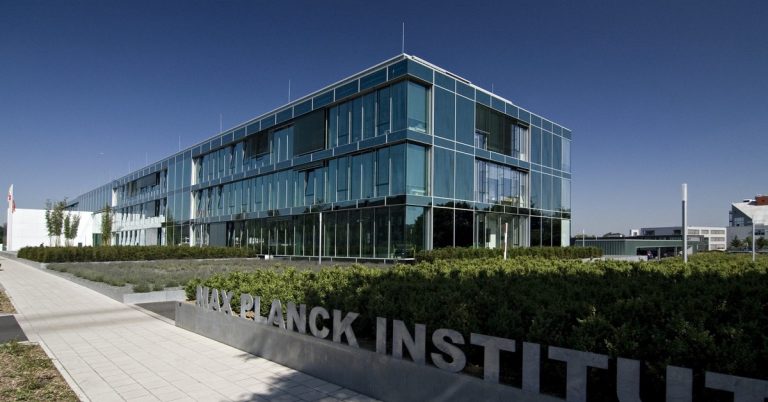
The Max Planck Institute of Animal Behavior at its sites in Konstanz and Radolfzell offers an international, interdisciplinary, and cooperative environment that opens up unique research opportunities. The goal of our basic research is to develop a quantitative and predictive understanding of the decisions and movements of animals in their natural environment.
For the Genes and Behavior Research Group at the Max Planck Institute of Animal Behavior, we are looking for a highly motivated Postdoc (m/f/d). The position is initially offered for 2 years, with the possibility of extension. The position is located in Konstanz. The expected starting date is summer 2026, latest by August 1st, 2026.
Postdoctoral position (m/f/d) 100 % – “The sensory ecology of worm towers.”
Our group
The Genes and Behavior research group is headed by Dr. Serena Ding. We are broadly interested in understanding how and why nematodes behave collectively. To address our research questions, we use a combination of genetic, behavioral, quantitative, and modeling techniques to study a range of collective behaviors in groups of nematodes, including the model organism C. elegans.
The project
We recently established that towering behavior is a mechanism for collective dispersal in Caenorhabditis nematodes. We also identified natural dispersal vectors for nematode species in our field sites, defining the ecological context for tower-mediated dispersal. For this project, we aim to understand how worm towers acquire, process, and respond to environmental and social information using their senses (e.g., mechano-, olfactory-, and electro-sensing) to achieve successful tower construction, vector detection, and collective relocation. We seek to address whether worms perform more effectively as a sensory collective than as isolated individuals. We are also interested in the environmental adaptation of the sensory systems and decision-making using sensory information. Research will involve designing, executing, and analyzing experiments to address one or more of these questions. This project will adopt a primarily laboratory-based approach and may incorporate field work in Landkreis Konstanz. Project specifics will be tailored based on the skills, experience, and ideas of the successful candidate.
Job requirements
Essential
- PhD in invertebrate neuroscience, animal behavior, collective behavior, or a related field
- Fundamental interest in biological phenomena and an open-minded approach to questions
- Literature awareness
- Willingness and ability to work both independently and collaboratively in a scientifically and culturally diverse team
- Excellent verbal and written communication skills in English
Desirable
- Knowledge of C. elegans sensory biology would be highly relevant for this project
- Creativity and breadth with experimental approaches
Our offer
We offer an interesting job in an open-minded team, a responsible and varied workplace in a growing interdisciplinary and international research institute. The payment is made in accordance with your experience and qualification and the collective agreement for the public service (TVöD-Bund). The Max Planck Society endeavors to employ more severely disabled people. Applications from severely disabled persons are expressly welcome. The Max Planck Society strives for gender and diversity equality. We welcome applicants from all backgrounds.
How to apply
We are looking forward to receiving your application by May 5, 2026. Please apply with
- a motivation letter, including a brief outline of your proposed approach to this project
- a CV
- contact details for two referees
Please submit your application documents through our application management system.
Questions about this position will be answered by Dr. Serena Ding at serena.ding@ab.mpg.de.
About the Author